Source injection molding machine ball screw for automation, clamping, and linear slide
Compare 30 verified listings for injection molding machine ball screw components including rolled and milled variants with customization options. Buyers can evaluate precision levels, packing methods, and supply capabilities from manufacturers in China and Japan.
Key considerations
Products List


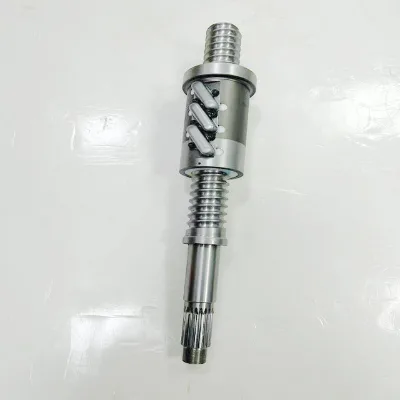
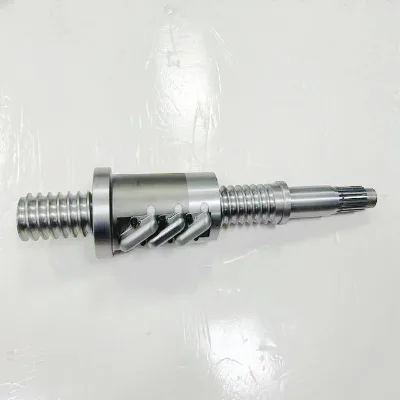
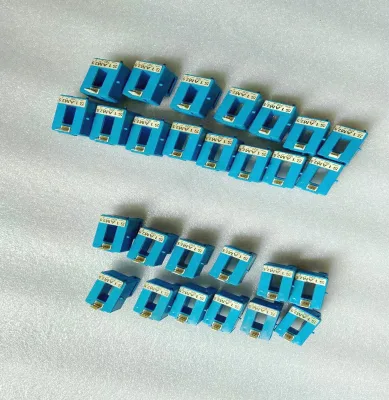


Comprehensive Sourcing Guide
Strategic Sourcing Guide for Injection Molding Machine Ball Screws
Understanding Core Technical Specifications and Variants
When sourcing ball screws specifically for injection molding machines, buyers must navigate a complex landscape of technical variants that directly impact machine performance, precision, and longevity. The supplied product data indicates that these components are not monolithic; they exist in distinct configurations such as "Inner Loop" types and models designated by codes like "FF," "FFZD," and "JF." These designations often refer to the specific mechanical architecture required to handle the high cyclic loads and rapid reciprocating movements inherent in injection molding processes.
A critical observation from the available data is the existence of both single and double nut configurations. The "Nut Number" attribute appears as both "Single" and "Double" across different listings. In the context of injection molding, a double nut arrangement is frequently preferred for applications requiring higher rigidity and the elimination of backlash, which is essential for maintaining precise clamp tonnage and injection pressure. Conversely, single nut assemblies may be suitable for less demanding axis movements where space or cost constraints are primary drivers.
The manufacturing process also varies significantly. The data explicitly lists "Milled" as a product standard, while other entries mention "rolled ball screw" as a model specification. This distinction is vital for procurement. Rolled screws are generally more cost-effective and suitable for lower-precision applications, whereas milled screws offer superior accuracy and are often required for the high-precision axis movements found in advanced injection molding machines. Buyers must verify whether the specific axis in their machine (e.g., the injection screw drive or the mold clamping unit) demands the tighter tolerances of a milled screw or if a rolled variant suffices.
Furthermore, the "End Pocessing" attribute lists Lathe, Mill, Grind, and Tap as available capabilities. This suggests that the ball screws can be customized to fit specific machine interfaces. The "Diameter" is listed as "Customized," indicating that off-the-shelf standard sizes may not always be available or optimal. Procurement strategies should prioritize suppliers who can provide these custom machining services to ensure a perfect fit for the specific injection molding machine model, whether it is a vertical or horizontal composite structure.
Compliance, Certification, and Origin Verification
In the global supply chain for industrial automation components, verifying the origin and compliance status of ball screws is a non-negotiable step for risk mitigation. The supplied facts highlight a diverse geographic footprint, with origins explicitly stated as "China," "China Nanjing," and "Japan." The "Japan" origin is particularly significant, as Japanese manufacturing is historically associated with high-precision components and strict quality control standards, often commanding a premium in the market. In contrast, products originating from "China Nanjing" or general "China" locations may offer competitive pricing but require rigorous due diligence regarding quality consistency.
The data also references specific brand names such as "faunc" and "JWS." While these names appear in the product listings, buyers must treat them as observations of available inventory rather than endorsements of universal quality. The presence of "OEM: Yes" indicates that many suppliers are willing to produce components under the buyer's brand or for specific machine manufacturers, which is common in the injection molding sector where original equipment manufacturers (OEMs) often require proprietary parts.
Regarding certifications and standards, the provided text mentions "Milled" as a standard but does not explicitly list international certification bodies like ISO 9001 or specific industry standards for ball screws (such as JIS B 1192 or ISO 3408). Therefore, buyers cannot assume compliance based on the provided text alone. It is imperative to request documentation proving adherence to relevant international standards. The "machinery test report: Provided" attribute is a positive signal, suggesting that some suppliers conduct and document performance testing. However, buyers must verify the scope of these reports to ensure they cover the specific load, speed, and life-cycle parameters relevant to their injection molding application.
Additionally, the "Condition" is listed as "New" and "Warranty" as "1 Year" for certain items. While a one-year warranty is a baseline expectation, the specific terms and coverage (e.g., whether it covers premature wear or manufacturing defects) must be clarified. The "Showroom Location" spanning the United States, Mexico, and Thailand suggests a global distribution network, which can be advantageous for logistics but requires careful vetting of the local entity's authority to provide genuine warranty support.
Cost Drivers and Supply Chain Economics
The economic landscape for sourcing injection molding machine ball screws is influenced by several distinct factors, including customization, origin, and supply capability. The observed price range in the data spans from $0.01 to $500,000. This extreme variance is not indicative of a single product type but rather reflects the spectrum from small, standard components to large, custom-engineered assemblies or complete subsystems. Buyers must be cautious not to equate the lowest price point with the most suitable component for high-performance injection molding.
A primary cost driver is the level of customization. The "Customization: Available" attribute, combined with "Diameter: Customized" and specific "End Pocessing" requirements, implies that bespoke solutions will incur higher costs than standard catalog items. The "Supply Ability" varies significantly, with some listings offering "50 pieces per Week" and others "50 pieces per Month." This discrepancy highlights the importance of aligning procurement timelines with supplier capacity. For urgent production needs, a supplier with a higher weekly output may be necessary, even at a premium, whereas a project with a long lead time might accommodate a lower monthly output to reduce costs.
The "MOQ range" of 1 to 10,000 units further complicates cost analysis. Small buyers or those requiring spare parts for maintenance may find the lower end of this range accessible, while large-scale production replacements might benefit from economies of scale at the higher end. However, the "Selling Units" are listed as "Single item," suggesting that the platform or supplier may allow for flexible ordering quantities, which is beneficial for prototyping or small-batch maintenance.
Packaging and logistics also contribute to the total cost of ownership. The data specifies that products "Have to Be Rust Protected and Packed for Over Sea" and are "Suitable for Overseas." This indicates that international shipping requires specialized packaging to prevent corrosion during transit, a critical factor for components that may sit in inventory for extended periods. The "Weight (KG): 15" for a specific model provides a baseline for freight calculations, but buyers must account for the weight of custom or larger assemblies. The "Port of dispatch: china" confirms that most supply originates from Chinese ports, necessitating consideration of ocean freight rates and customs duties in the final cost model.
Typical Applications and Performance Requirements
Ball screws in injection molding machines serve critical functions in two primary areas: the clamping unit and the injection unit. The data references "Clamping Way: Hydraulic" and "Structure: Vertical and Horizontal Composite," which are common configurations in modern injection molding presses. In the clamping unit, the ball screw converts the rotary motion of a servo motor into the linear force required to hold the mold closed against the high pressure of injected molten plastic. Here, precision and rigidity are paramount to prevent mold deflection and ensure part quality.
The "High-Precision Linear Slide" and "High Rigidity Guide Column Structure" mentioned in the data point to the broader system requirements. The ball screw must work in harmony with these slides and columns to achieve the "Faster and More Accurate" movement necessary for efficient cycle times. For the injection unit, the ball screw drives the screw forward to inject material into the mold. The "Reciprocating Type" plasticizing way suggests that the system must handle rapid back-and-forth motion, requiring a ball screw with high dynamic response and fatigue resistance.
The "Adaptable Injection Unit" and the ability to "Meet Different Requirement of Shape and Size" indicate that these components are versatile. They can be adapted for various machine sizes, from small desktop units to large industrial presses. The "Automation: Automatic" and "Computerized: Computerized" attributes highlight that modern ball screws are integral to automated, computer-controlled systems. This integration demands that the ball screws maintain consistent performance under computerized feedback loops, where any deviation in position or speed can lead to product defects.
Furthermore, the "Core components: Pressure Vessel" attribute, while seemingly unrelated to the screw itself, may refer to the broader context of the machine's hydraulic or pressure systems where the ball screw operates. Ensuring that the ball screw is compatible with the pressure dynamics of the machine is essential for safety and reliability. The "Marketing Type: New Product 2020" suggests that some available models are relatively recent innovations, potentially offering improved efficiency or durability compared to older generations.
Supplier Evaluation and Selection Criteria
Selecting the right supplier for injection molding machine ball screws requires a multi-faceted evaluation process that goes beyond price and availability. The "OEM: Yes" and "Customization: Available" attributes suggest that suppliers should be evaluated on their engineering capabilities. A strong supplier will not just sell a component but will collaborate with the buyer to ensure the ball screw meets the specific mechanical and operational requirements of the injection molding machine.
The "After-sales Service Provided: Video technical support" is a valuable asset, particularly for international buyers who may not have immediate access to on-site technical expertise. This service can be crucial for troubleshooting installation issues or optimizing machine performance. Buyers should also assess the "Warranty" terms, noting that a "1 Year" warranty is standard but should be scrutinized for exclusions and claim procedures.
The "Machinery test report: Provided" is a key differentiator. Suppliers who proactively provide test reports demonstrate a commitment to quality assurance. Buyers should request these reports to verify that the ball screws have been tested for load capacity, speed, and accuracy. The "Condition: New" status is a basic requirement, but buyers must ensure that the "New" condition is not a misrepresentation of refurbished or reconditioned parts.
Geographic location plays a role in supplier evaluation. With origins in "China," "China Nanjing," and "Japan," buyers should consider the implications of the supply chain. Japanese suppliers may offer higher precision and reliability but at a higher cost and potentially longer lead times. Chinese suppliers may offer competitive pricing and faster local support but require rigorous quality checks. The "Showroom Location" in the United States, Mexico, and Thailand indicates that some suppliers have a physical presence in key markets, which can facilitate easier communication and faster resolution of issues.
Quality Control and Long-Term Procurement Strategies
Implementing a robust quality control (QC) strategy is essential for ensuring the reliability of ball screws in injection molding applications. Given the "Milled" and "Rolled" distinctions, buyers must define clear acceptance criteria for surface finish, dimensional accuracy, and material hardness. The "End Pocessing" capabilities (Lathe, Mill, Grind, Tap) should be verified against the buyer's specific tolerance requirements. For high-precision applications, a "C7" precision grade, as noted in the data, may be a minimum standard, but buyers should confirm if higher grades are available for critical axes.
Long-term procurement considerations involve building a sustainable supply chain. The "Supply Ability" of 50 pieces per week or month suggests that buyers should plan for potential bottlenecks. Establishing a relationship with a supplier who can scale production as the buyer's needs grow is crucial. The "Customization" aspect allows for long-term partnerships where the supplier can evolve the product design to match the buyer's changing machine requirements.
The "Packing" requirements, specifically "Rust Protected and Packed for Over Sea," highlight the need for proper storage and handling protocols. Buyers should ensure that their inventory management systems account for the shelf life of these components and that they are stored in conditions that prevent corrosion. The "Warranty" period of one year sets a baseline for expected performance, but buyers should aim for suppliers who offer extended warranties or performance guarantees for critical applications.
Finally, the "Marketing Type: New Product 2020" indicates that the market is evolving. Buyers should stay informed about new technologies and materials that could enhance the performance of their injection molding machines. By maintaining a proactive approach to supplier evaluation and quality control, buyers can ensure a steady supply of high-quality ball screws that support the efficiency and reliability of their manufacturing operations. The "High-Precision Linear Slide" and "High Rigidity Guide Column Structure" are system-level goals that the ball screw must support, making the selection of the right component a strategic decision with long-term implications for production output and product quality.
FAQs
What customization options are available for injection molding machine ball screws?
Customization is available for diameter and end processing including lathe, mill, grind, and tap. Buyers can request specific modifications to fit vertical or horizontal composite structures while ensuring rust protection for overseas shipping.
Which nut configurations exist for these ball screw models?
Both single and double nut configurations are observed in the product listings. Double nut arrangements are often preferred for higher rigidity and backlash elimination, while single nuts may suit less demanding axis movements.
How does the manufacturing standard affect ball screw selection?
Milled standards are listed alongside rolled ball screw models, offering different precision levels. Milled screws provide superior accuracy for high-precision axes, whereas rolled variants are generally more cost-effective for lower-precision applications.
Can buyers find ball screws manufactured in Japan?
Yes, some products originate from Japan, offering high-precision components with strict quality control. Other options include origins from China and China Nanjing, which may provide competitive pricing but require rigorous quality verification.
What warranty and after-sales support are provided?
A one-year warranty is standard for new condition items, often accompanied by video technical support. Buyers should verify specific warranty terms and request machinery test reports to ensure performance compliance for their injection molding needs.
How are these ball screws packaged for international shipping?
Products must be rust protected and packed specifically for overseas transport to prevent corrosion. Packaging details include boxes, and the supply chain must account for dispatch ports in China to ensure safe delivery.